
Table of Contents
Businesses rely on phone answering to manage customer inquiries, schedule appointments, and maintain service continuity. One of the most important decisions is whether to choose in-house vs outsourced phone answering. This choice depends on operational needs, available resources, and the level of control required over customer communication. Both models offer distinct benefits and limitations that impact service quality, costs, and scalability.
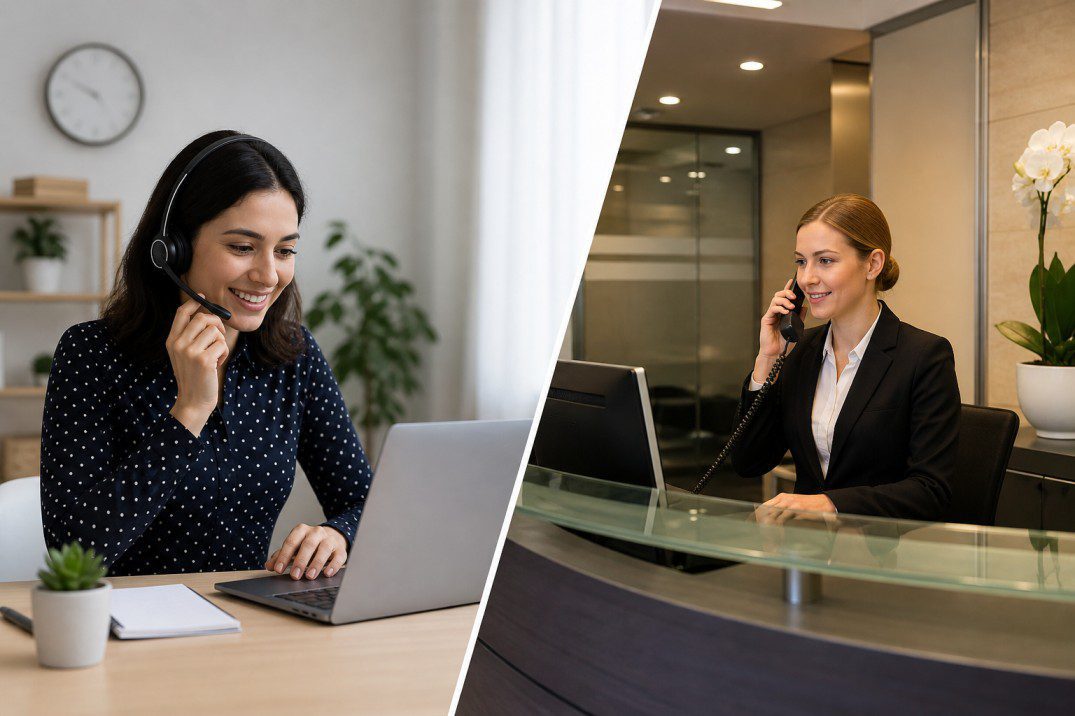
Outsourced Phone Answering refers to using external providers who manage incoming calls on behalf of a business. These services offer extended availability, professional call handling, and reduced internal workload without the need for recruitment, training, or infrastructure. In contrast, in-house phone answering involves dedicated staff within the business handling all incoming calls, providing direct oversight and control over customer interactions.
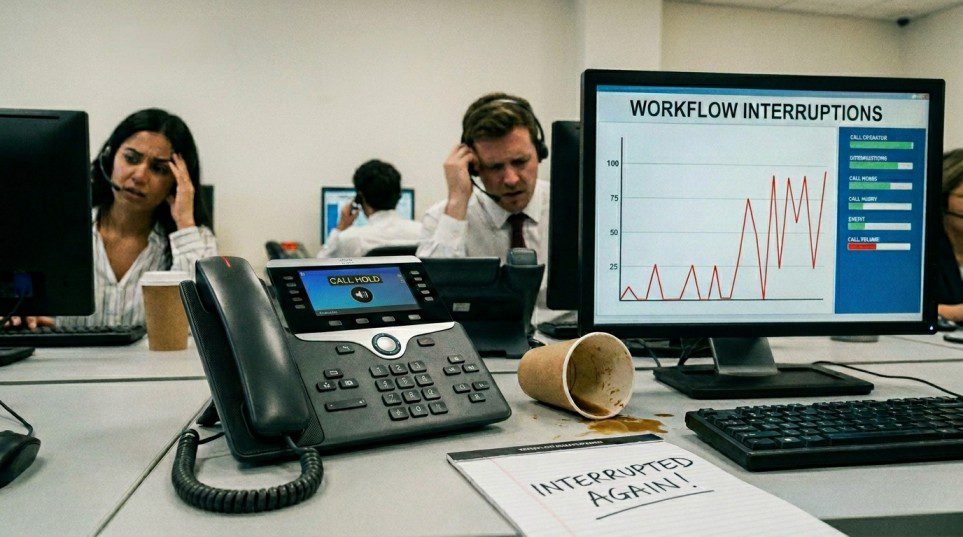
The differences between these services lie in cost structure, training needs, data security, and responsiveness to call volume fluctuations. In-house teams offer greater control and are often preferred for handling sensitive customer data. However, they require ongoing management, fixed salary expenses, and resource allocation. On the other hand, outsourcing phone answering offers flexibility, potentially lower costs, and the ability to scale with business demands, making it especially attractive to small businesses looking to reduce time spent on call handling.
Choosing the Right Phone Answering Solution: In-House vs Outsourced

When considering in-house vs outsourced phone answering, business owners need to assess the trade-offs between these models. Outsourcing provides cost-effective scalability, making it ideal for small businesses, while in-house answering ensures complete control, which is critical for companies with high data security requirements. Outsourcing offers businesses the ability to scale their customer service without the need for significant investment in infrastructure, which is a major advantage for startups or companies experiencing rapid growth.
In-house phone answering, on the other hand, provides direct control over the communication process. Internal staff can be trained to align with the company’s brand and values, providing a level of personalization that outsourced teams may struggle to replicate. Additionally, in-house teams can gain deeper knowledge of the products or services, allowing for more specialized and accurate customer support. However, this comes with significant costs in terms of salaries, benefits, equipment, and training, making it more suited to larger businesses or those with complex customer service needs.
Ultimately, the decision between in-house vs outsourced phone answering depends on the specific needs of the business. If flexibility, cost-efficiency, and the ability to scale quickly are key priorities, outsourcing is a strong choice. However, if maintaining control over customer interactions and handling sensitive data is crucial, in-house answering might be the preferred solution. By carefully weighing these factors, businesses can choose the option that best supports their customer service goals and operational strategy.
What is Outsourced Phone Answering?
Outsourced phone answering is a service where businesses delegate incoming call management to an external provider. These providers use trained receptionists or call agents who handle calls according to instructions set by the business. The service operates remotely, with calls routed to a dedicated team or shared agents, depending on the plan selected.
Outsourced teams follow predefined scripts, manage bookings, take messages, and transfer calls to internal staff when required. This model is attractive to small to medium businesses aiming to reduce administrative workload, maintain professional customer communication, and improve responsiveness without growing internal headcount. For businesses looking for an efficient solution, overflow phone answering services can seamlessly handle peak call times.
What is In-House Phone Answering?
In-house phone answering is the process of managing all incoming business calls using staff employed directly by the business. Calls are handled by receptionists or administrative team members who work within the business premises or remotely as part of the internal team.
This model provides full control over how calls are managed, including tone, language, call handling style, and resolution processes. Staff can be trained to follow brand-specific procedures, respond to complex queries, and access customer information directly for faster resolution.
In-House vs Outsourced Phone Answering: Key Differences
| Aspect | In-House Phone Answering | Outsourced Phone Answering |
|---|---|---|
| Employment Model | Managed by internal staff | Handled by external service provider |
| Cost Structure | Fixed costs (salaries, benefits, equipment) | Variable costs (pay-per-use or subscription) |
| Availability | Limited to staff working hours | Available after hours, weekends, 24/7 |
| Control Over Calls | Full control over scripts and processes | Follows agreed protocols but managed externally |
| Training & Supervision | Requires internal training and oversight | Provider manages staff training and quality control |
| Scalability | Requires recruitment and planning | Easily scaled up or down based on call volume |
| Data Sensitivity | Better suited for handling sensitive information | May require additional agreements for data protection |
| Customer Familiarity | Staff may have deeper product or business knowledge | Agents rely on provided scripts and instructions |
| Space & Infrastructure | Needs office space and equipment | No additional infrastructure required |
What is the Cost of In-House Phone Answering?
In-house phone answering typically costs businesses between AUD 55,000 and AUD 70,000 per year for a full-time receptionist in Australia. This includes base salary, superannuation, payroll tax, leave entitlements, training, and ongoing management. For a single employee on an AUD 50,000 salary, total employment costs can reach AUD 57,500 to AUD 65,000, depending on location and overheads. You can find more information on the costs of hiring full-time employees in Australia on the Australian Government Fair Work website.
What is the Cost of Outsourced Phone Answering?
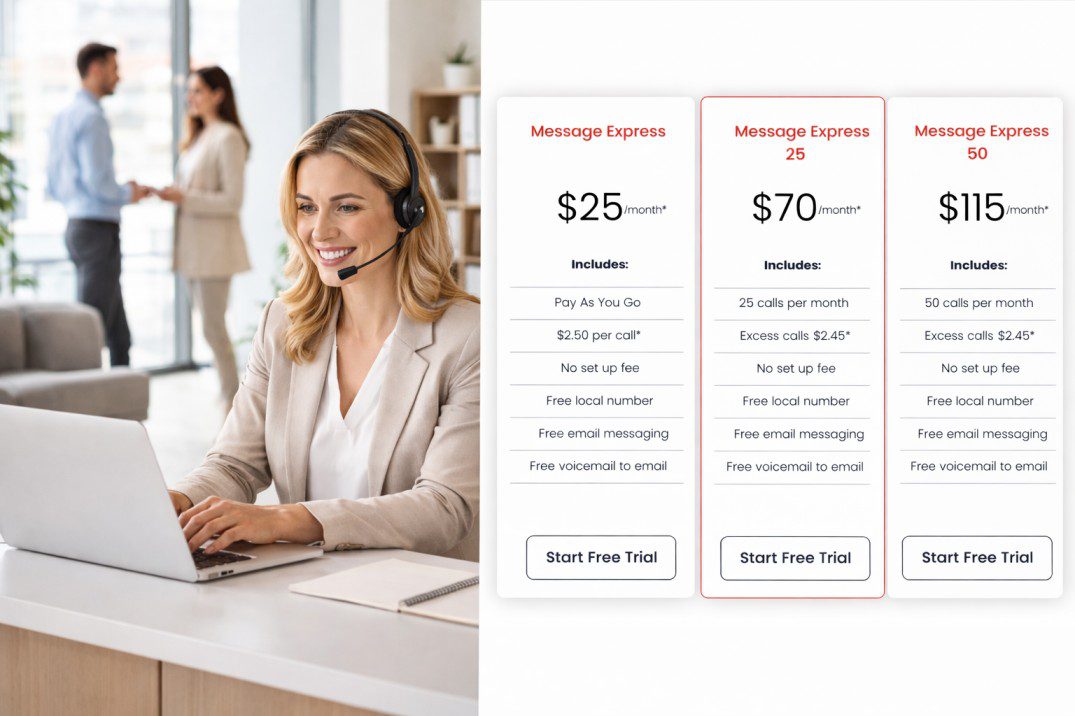
Outsourced phone answering services offer plans starting as low as AUD 25 per month. More comprehensive services, like virtual receptionist plans with call transfers, begin at AUD 39 per month. Some providers offer services starting at approximately AUD 1 per day, allowing businesses to pay for the services they need without the financial commitment of hiring full-time staff.
Which Solution Will Benefit Your Business the Most?

Choosing between in-house vs outsourced phone answering depends on business size, budget, compliance requirements, and customer service strategy. Outsourced phone answering is ideal for businesses that need flexibility, scalability, and cost control. In-house answering is best when businesses need close oversight, data control, or have specific training needs for handling calls.
Why You Should Choose Ruby Receptionist for Phone Answering Services
Ruby Receptionist offers a professional, flexible, and local solution for businesses needing reliable phone answering services in Australia. When choosing the right phone answering solution: In-House vs Outsourced Phone Answering, Ruby Receptionist provides a cost-effective alternative to hiring full-time in-house staff. Their services, which include extended availability, customized scripts, and professional receptionists, allow businesses to scale their operations without the overheads and long-term commitment of in-house solutions. Whether you’re looking for a live answering service or need assistance with diary management, Ruby Receptionist has the tools to meet your needs and help you make an informed decision on the best solution for your business.