Table of Contents
Accurately assessing the true in-house receptionist cost Australia businesses face is crucial to making an informed hiring decision. While hiring someone to manage calls and customer interactions might seem straightforward, a more profound cost analysis often reveals much higher expenses.
Many Australian businesses—especially small to medium enterprises—are now reassessing whether a traditional receptionist is the most efficient choice. To understand this shift, let’s take a closer look at what you’re really paying for and how to make a smarter, more cost-effective decision.
What Does an In-House Receptionist Actually Cost?
When people think about hiring, they often focus only on salary. But the true cost of a receptionist in Australia includes several layers of expenses.
1. Base Salary
In Australia, a full-time receptionist typically earns:
- $50,000 to $65,000 per year (depending on location and experience)
- Higher salaries in cities like Sydney and Melbourne
But salary is just the starting point.
2. Superannuation Contributions
Employers are required to pay superannuation (currently 11% and rising). This adds:
- $5,500 to $7,000 annually
3. Payroll Tax & Insurance
Additional employer obligations include:
- Payroll tax (varies by state)
- Workers’ compensation insurance
Additional employer obligations include payroll tax (which varies by state) and workers’ compensation insurance. Employers must also comply with national wage standards and entitlements set by the Fair Work Ombudsman, which outline minimum pay rates, leave, and employee rights across Australia.
Hidden Costs That Add Up Quickly
The real in-house receptionist cost Australia becomes clear when you include the hidden expenses most businesses overlook. Transitioning from direct financial outlays, these often unexpected costs can be just as significant.

Recruitment Costs
Hiring isn’t free. You may spend on:
- Job ads (Seek, Indeed, LinkedIn)
- Recruitment agencies
- Time spent interviewing candidates
Training & Onboarding
Even experienced hires require training:
- Systems and software
- Internal processes
- Customer service standards
This process takes time and reduces productivity in the early stages.
Equipment & Workspace
An in-house receptionist needs:
- Desk, chair, and office space
- Computer and phone system
- Software licenses
In Australia, office space alone can be a major expense.
Sick Leave & Annual Leave
When your receptionist is away:
- Calls go unanswered, or
- You need temporary staff
This situation creates service gaps and additional costs.
Full Cost Breakdown Table
Here’s a simplified view of the typical annual receptionist costs Australian businesses may face:
| Salary | $55,000 |
| Superannuation | $6,000 |
| Payroll Tax & Insurance | $3,000 |
| Recruitment | $2,000 |
| Training | $2,000 |
| Equipment & Setup | $3,000 |
| Leave Coverage | $4,000 |
| Total | $75,000+ |
This estimate shows how quickly costs can climb well beyond the base salary. As these totals accumulate, it’s important to consider additional factors that affect your business’s investment.
The Productivity Factor Most Businesses Miss
Beyond financial costs, productivity is another major consideration.
An in-house receptionist:
- Works fixed hours only
- Can handle one call at a time
- May struggle during peak periods
This means missed calls, slower response times, and lost opportunities.
In contrast, modern businesses are exploring flexible solutions such as virtual receptionist services to improve efficiency without increasing overhead. This brings us to how these options compare with traditional approaches.
Comparing In-House vs Virtual Receptionist Services
Let’s break down the differences between the traditional in-house receptionist approach and a virtual receptionist to highlight the main distinctions in cost, coverage, and management responsibilities.
In-House Receptionist

- Fixed annual cost ($70K+)
- Limited availability
- Requires management and supervision
- Single point of failure
Virtual Receptionist
- Pay only for what you use
- Available beyond standard hours
- Scalable based on call volume
- No hiring or training required
For many Australian businesses, this shift is helping reduce overhead while improving customer service. Still, there are circumstances where an internal hire remains the right fit.
When an In-House Receptionist Makes Sense
Despite the high costs, there are situations where hiring internally may still be suitable:
- High foot traffic offices
- Businesses needing constant in-person interaction
- Large enterprises with multiple departments
However, for most service-based businesses, the cost-benefit ratio warrants reconsideration.
Cost-Saving Alternatives for Australian Businesses
If you’re looking to reduce the in-house receptionist cost Australia, here are practical alternatives:
1. Hybrid Model
Combine:
- Virtual receptionist for calls
- Minimal in-house admin support
This balances cost and functionality.
2. Outsourced Reception Services
Outsourcing eliminates:
- Recruitment costs
- Training time
- Employee overhead
You can explore options through industry-specific solutions tailored to your business type.
3. Scalable Support
Choose services that grow with your business instead of committing to fixed salaries. This flexible approach ensures your costs scale appropriately as your needs change.
Checklist: Should You Hire In-House or Outsource?
Use this quick checklist to decide:
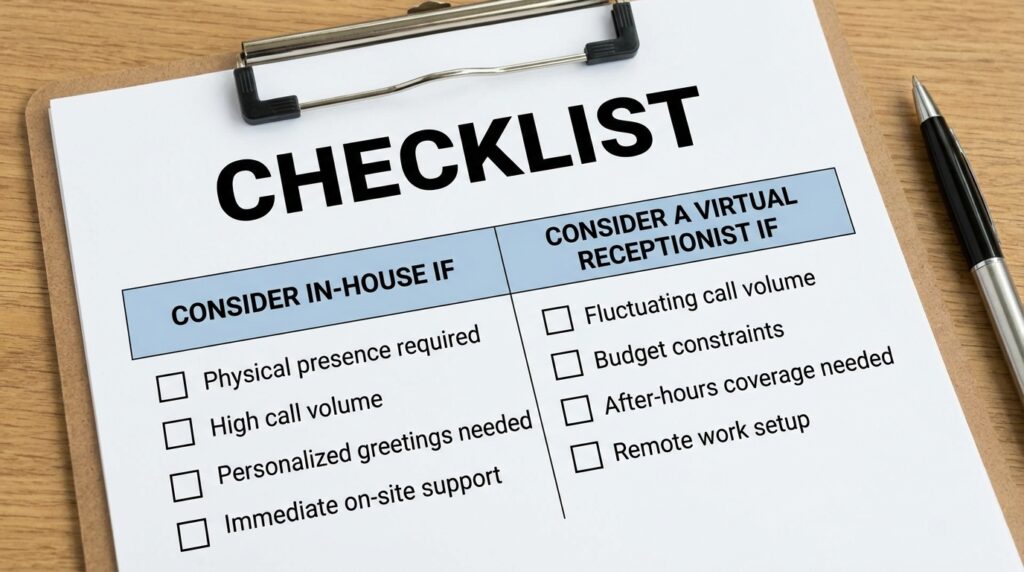
Consider In-House If:
- You need a full-time physical presence.
- Your call volume is consistent and high
- Budget is not a primary concern
Consider a Virtual Receptionist If:
- You want to reduce overhead costs
- Your call volume fluctuates
- You need extended or after-hours coverage
- You want to improve efficiency without hiring
The Long-Term Financial Impact
Over 3–5 years, the financial impact of employing an in-house receptionist cost Australia becomes even more significant.
For example:
- 3 years = $225,000+
- 5 years = $375,000+
This figure does not include salary increases or additional overheads.
This approach, compared with flexible solutions, can yield substantial savings.
Customer Experience Matters More Than Ever
Australian customers expect:
- Fast response times
- Professional communication
- Consistent service
Missed calls can lead to lost revenue and damaged reputation.
A well-managed call handling system—whether in-house or outsourced—plays a critical role in business growth. This strategic choice can be transformative as industry trends evolve.
Smart Businesses Are Rethinking Reception
More businesses across Australia are moving away from traditional setups. The focus is now on:
- Cost efficiency
- Scalability
- Reliability
By understanding the full cost of a receptionist, Australian business owners can make more informed decisions that support long-term growth. Evaluating these costs helps ensure the solution aligns with modern business needs.
If you’re evaluating options, it’s worth exploring how in-house receptionist cost Australia.
Final Thoughts: Is It Worth the Cost?
Hiring a receptionist may seem straightforward. However, in Australia, the true in-house receptionist cost Australia extends beyond wages—it includes direct and indirect expenses that can impact your bottom line. For many businesses, especially those looking to stay lean and competitive, alternatives offer better value without compromising service quality.
Conclusion
If you’re looking to reduce costs while improving customer experience, it may be time to rethink your approach. Services like Ruby Receptionist provide flexible, professional call handling without the burden of hiring and managing staff.
To learn more or get started, visit the contact us page Or call directly at Tel: 1300 72 10 73.
A smarter, more efficient solution could be just one step away.