
Table of Contents
A virtual receptionist is a remote professional service that provides businesses essential support, such as answering calls, managing customer inquiries, and scheduling appointments. This service offers numerous benefits, including cost savings by reducing overhead expenses, 24/7 availability to enhance customer satisfaction, and scalability to accommodate growing business needs. Key features of a virtual receptionist include call routing, message transcription, and advanced technologies like AI language processing and IVR (Interactive Voice Response) systems.
Ruby Receptionist stands out in this field by delivering a comprehensive solution that combines the human touch with innovative technology to create an effective office management system. In Australia, these services typically cost between $33 and $625 per month, depending on the level of service and call volume. To explore how a virtual receptionist can transform your business operations and improve customer engagement, keep reading to discover more about its benefits and features!
What is a Virtual Receptionist?
A virtual receptionist is a professional service that provides remote business support by managing customer interactions and administrative tasks. This includes answering phone calls, taking messages, scheduling appointments, and handling inquiries without being physically present at the company’s location. Unlike traditional receptionists, who work on-site, virtual receptionists operate from remote locations. They often utilise advanced technologies such as AI language processing and automated receptionist systems to enhance efficiency.
These professionals serve as an extension of a business, ensuring seamless communication through features like call routing and message transcription. They can also streamline operations by utilising tools such as IVR (Interactive Voice Response) systems and appointment scheduling bots. By offering round-the-clock availability, virtual receptionists improve customer satisfaction and retention while allowing businesses to focus on their core functions.
Additionally, they provide flexibility in service usage, enabling companies to scale their support according to demand without incurring the overhead costs of hiring full-time staff.
Overall, a Virtual Receptionist enhances operational efficiency and contributes to a professional image that can significantly impact customer perceptions and business growth.
What is the History of the Virtual Receptionist?
The journey of Virtual Receptionists began in the early 20th century, rooted in the traditional role of receptionists who managed front desk duties such as answering calls and greeting visitors. As businesses expanded and technology evolved, there was a growing need for more efficient communication solutions. The introduction of the telephone revolutionised customer interactions, making prompt call handling essential for good service.
With the advent of the internet and technological advancements, virtual receptionists emerged. Initially, these roles were filled by human operators using essential automation tools. However, as artificial intelligence (AI) and machine learning advanced, virtual receptionists evolved into sophisticated systems capable of handling complex inquiries and providing personalised service. Today’s virtual receptionists utilise AI language processing, IVR (Interactive Voice Response) systems, and automated scheduling bots to enhance efficiency and improve customer experience. This evolution has made them indispensable in modern business operations.
What are the Benefits of Virtual Receptionist Services?
Virtual receptionist services offer numerous advantages that can significantly enhance business operations. Here are some key benefits:
- Cost Efficiency: Hiring a Virtual Receptionist is often more economical than employing a full-time receptionist. Businesses pay only for their services, eliminating salaries, benefits, and office space costs.
- 24/7 Availability: Virtual Receptionists provide round-the-clock support, ensuring that customer inquiries are addressed promptly at any time of day or night. This continuous availability enhances customer satisfaction and can lead to increased sales opportunities.
- Increased Productivity: By outsourcing administrative tasks like call answering and appointment scheduling to a Virtual Receptionist, in-house staff can focus on their core responsibilities. This shift improves efficiency and productivity within the organisation.
- Enhanced Customer Experience: Businesses can ensure that every caller receives prompt and courteous service by managing customer interactions with trained professionals. This level of attentiveness fosters loyalty and encourages positive reviews.
- Scalability: As businesses grow or experience fluctuations in demand, Virtual Receptionist services can quickly scale to meet changing needs without the hassle of hiring or training new staff.
Hiring a Virtual Receptionist allows businesses to streamline operations while maintaining a professional image. By leveraging these services, companies can enhance customer interactions and focus on growth without being bogged down by administrative tasks.
What Industries Benefit Most from Virtual Receptionist Services?
Virtual receptionist services are particularly beneficial across various industries that require consistent customer interaction and administrative support. Sectors such as accounting, corporate environments, franchises, insurance, legal services, small businesses, construction, electrical services, HVAC, plumbing, allied health sectors like chiropractic care, dental practices, medical facilities, physiotherapy clinics, psychology practices, surgical centres, property management firms, and real estate agencies all stand to gain from these services.
In these industries, virtual receptionists help manage calls efficiently, schedule appointments seamlessly, and handle customer inquiries professionally. This ultimately enhances operational efficiency and client satisfaction. By leveraging virtual receptionist services, these industries can enhance their operational efficiency, improve customer interactions, and maintain a professional image, ultimately contributing to their growth and success in a competitive market.
1. Accounting
2. Corporate
3. Franchises
4. Insurance
5. Legal
6. Small Businesses
7. Construction
8. Electrical
9. HVAC
10. Plumbing
11. Allied Health
12. Chiropractor
13. Dental
14. Medical
15. Physio
16. Psychologist
17. Surgeon
18. Property Management
19. Real Estate
What are the Essential Features of a Virtual Receptionist Service?
Virtual receptionist services have several essential features that enhance business operations and improve customer interactions. Here are some key features:
- Call Answering and Routing: Virtual receptionists manage incoming calls, ensuring that each call is answered promptly and routed to the appropriate department or individual, enhancing customer satisfaction.
- Message Taking and Transcription: They take detailed messages during calls and provide transcription services, ensuring that no critical information is lost and can be easily referenced later.
- Appointment Scheduling: Virtual receptionists use scheduling systems to manage appointments efficiently. They integrate with calendars to avoid conflicts and streamline booking processes.
- IVR (Interactive Voice Response) systems: IVR (Interactive Voice Response) systems allow callers to navigate options using their phone keypad or voice commands, ensuring they reach exemplary service quickly.
- 24/7 Availability: Many virtual receptionist services offer round-the-clock support, ensuring customer inquiries are addressed at any time, which is crucial for businesses operating in different time zones.
- CRM Integration: Virtual receptionists can integrate with customer relationship management (CRM) systems to access customer information quickly and provide personalised service.
What Pricing Plans Are Available for Virtual Receptionist Services?
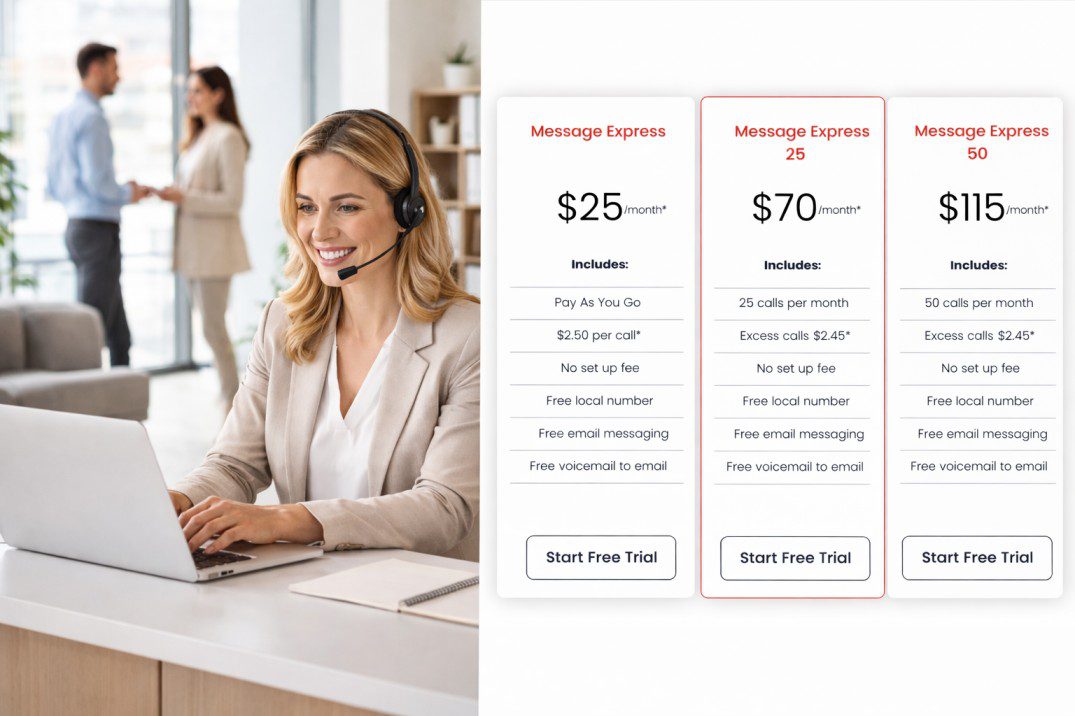
The cost of virtual receptionist services can vary widely based on the provider and the required service level. Ruby Receptionist offers a range of pricing plans:
| Plan Name | Monthly Cost (AUD $) |
| STANDARD | $33 |
| VIRTUAL RECEPTIONIST 20 | $75 |
| MOST POPULAR VIRTUAL RECEPTIONIST 50 | $185 |
| VIRTUAL RECEPTIONIST 100 | $330 |
| VIRTUAL RECEPTIONIST 200 | $625 |
Virtual receptionist services can cost between approximately $30 and over $600 per month, depending on the volume of calls and specific features included. In Australia, costs typically align with these ranges, with Ruby Receptionist providing competitive pricing tailored to various business needs. Here are the pricing details for virtual receptionist services in the target cities of Adelaide, Brisbane, Melbourne, Perth, and Sydney:
| City | Plan Name | Monthly Cost (AUD $) | Included Calls | Excess Call Rate (AUD $) |
| Adelaide | Virtual Receptionist 20 | $69 | 20 | $3.45 |
| Virtual Receptionist 50 | $165 | 50 | $3.45 | |
| Virtual Receptionist 100 | $295 | 100 | $3.45 | |
| Virtual Receptionist 200 | $550 | 200 | $3.40 | |
| Brisbane | Virtual Receptionist 20 | $69 | 20 | $3.45 |
| Virtual Receptionist 50 | $165 | 50 | $3.45 | |
| Virtual Receptionist 100 | $295 | 100 | $3.45 | |
| Virtual Receptionist 200 | $550 | 200 | $3.40 | |
| Melbourne | Virtual Receptionist 20 | $69 | 20 | $3.45 |
| Virtual Receptionist 50 | $165 | 50 | $3.45 | |
| Virtual Receptionist 100 | $295 | 100 | $3.45 | |
| Virtual Receptionist 200 | $550 | 200 | $3.40 | |
| Perth | Virtual Receptionist 20 | $69 | 20 | $3.45 |
| Virtual Receptionist 50 | $165 | 50 | $3.45 | |
| Virtual Receptionist 100 | $295 | 100 | $3.45 | |
| Virtual Receptionist 200 | $550 | 200 | $3.40 | |
| Sydney | Standard | $33 | None | $3.79 per call |
| Virtual Receptionist 20 | $69 | 20 | $3.99 | |
| Virtual Receptionist 50 | $185 | 50 | $3.99 | |
| Virtual Receptionist 100 | $330 | 100 | $3.99 | |
| Virtual Receptionist 200 | $625 | 200 | $3.99 |
These prices reflect the competitive nature of virtual receptionist services in major Australian cities, considering local market conditions and service availability.
What are the Types of Virtual Receptionists?
Several types of virtual receptionists cater to different business needs:
- Human Virtual Receptionist: This type employs trained professionals who handle calls and inquiries personally, providing a human touch to customer interactions.
- Automated Receptionist: Utilizing technology such as IVR systems and chatbots, automated receptionists manage basic inquiries and direct calls without human intervention.
- AI Receptionist: AI receptionist employs artificial intelligence for voice recognition and natural language processing tasks, allowing for more sophisticated customer interactions.
- Virtual Secretary: A virtual secretary provides administrative support beyond call handling, including managing emails, scheduling appointments, and performing other office management tasks.
- Chatbot Receptionist: Chatbot receptionists are AI-driven tools that engage customers through chat interfaces on websites or messaging platforms, providing instant responses to common inquiries.
How Does a Virtual Receptionist Work?
A virtual receptionist efficiently manages customer communications by combining technology with trained professionals. When a call comes in, it is answered by a virtual receptionist who may be located anywhere in the world. The receptionist uses call routing systems to direct inquiries to the appropriate department or individual within the company.
A virtual receptionist handles tasks such as answering phone calls, taking messages, scheduling appointments using an appointment scheduling bot, and providing customer support through various channels. They may also use AI language processing tools to enhance customer interactions by better understanding and responding to inquiries.
By integrating with office management systems and CRM tools, virtual receptionists ensure that they have access to relevant customer information at their fingertips. This seamless operation allows businesses to maintain professionalism while focusing on their core activities without being bogged down by administrative tasks.
How to Set Up Your Virtual Receptionist Service?
Setting up a virtual receptionist service from the user’s perspective involves a few straightforward steps. First, businesses should research various providers and compare their services, pricing plans, and features to find the best fit for their needs.
Once a provider is selected, users typically fill out an online form or contact the service to discuss their requirements. This may include specifying call handling preferences, setting up appointment scheduling systems, and integrating with existing customer relationship management (CRM) tools. After establishing these parameters, users will receive training or guidelines on effectively communicating with their virtual receptionists to ensure seamless interactions.
From a business perspective, setting up a virtual receptionist service requires careful planning and execution. Initially, businesses need to identify their specific needs, such as call volume and types of inquiries they typically receive. After evaluating various virtual receptionist providers, they should choose one that aligns with their operational goals and budget.
The next step involves configuring the service by providing necessary information, including call handling scripts and appointment scheduling system details. Finally, businesses should establish communication protocols to ensure the virtual receptionist integrates smoothly into their existing workflows, allowing for efficient call routing and transcription.
What’s the Difference Between a Virtual Receptionist and a Call Answering Service?
While virtual receptionists and call answering services manage incoming calls for businesses, they differ significantly in scope and functionality. A virtual receptionist typically offers a broader range of services, including call answering, appointment scheduling, message transcription, and customer interaction management. They often provide personalised service using scripts tailored to the business’s needs. In contrast, a call answering service primarily focuses on answering calls and taking messages without additional administrative support or customer engagement features.
| Feature | Virtual Receptionist | Call Answering Service |
| Call Handling | Yes | Yes |
| Appointment Scheduling | Yes | No |
| Customer Interaction | Personalised interactions | Limited interaction |
| Message Transcription | Yes | Often yes |
| Integration with CRM | Yes | Rarely |
What are the Differences Between a Traditional Receptionist and a Virtual Receptionist?
The differences between traditional and virtual receptionists are quite pronounced regarding functionality, cost, and flexibility. Traditional receptionists work on-site in an office, managing front desk duties such as greeting visitors and handling real-time calls.
They are often limited by office hours and require physical space within the business premises. Conversely, virtual receptionists operate remotely using technology to manage calls and inquiries from anywhere. They provide 24/7 availability without needing physical office space, which can lead to significant cost savings for businesses.
| Feature | Traditional Receptionist | Virtual Receptionist |
| Location | On-site | Remote |
| Availability | Limited to office hours | 24/7 availability |
| Cost | Higher due to salary and benefits | More cost-effective |
| Scope of Services | Primarily call handling | Comprehensive services, including scheduling and CRM integration |
Which Virtual Receptionist Service is the Best in Australia?
Ruby Receptionist is a leading choice for virtual receptionist services in Australia due to its exceptional blend of personalised support and advanced technology. With features like 24/7 availability, CRM integration, and tailored customer interactions, Ruby ensures businesses maintain professionalism while enhancing customer satisfaction effectively.
Is A Virtual Receptionist the Same As A Virtual Assistant?
No, a virtual receptionist is not the same as a virtual assistant. While both provide remote support, a virtual receptionist primarily manages customer interactions through call handling and appointment scheduling. A virtual assistant handles a broader range of administrative tasks and supports business owners directly.
Are Virtual Receptionists Live Agents, AI-based, or Both?
Virtual receptionists can be live agents, AI-based, or both, depending on the service provider and the business’s specific needs. Live agents offer personalised interactions and handle complex inquiries, while AI-based receptionists use technology to automate basic tasks, providing efficiency and availability around the clock.
Can the Virtual Receptionist Handle Multiple Languages?
Yes, the virtual receptionist can handle multiple languages, making it an excellent option for businesses that cater to a diverse clientele. Bilingual or multilingual receptionists enhance customer experience by communicating effectively with clients in their preferred language, breaking down language barriers.
Does the Virtual Receptionist Support Call Transferring?
Yes, the virtual receptionist supports call transferring, allowing seamless communication between callers and the appropriate department or individual. This feature ensures that customer inquiries are efficiently routed to the right person, enhancing overall service quality and response times.
Does the Service Include Email or Chat Support?
Yes, the service includes email and chat support, enabling businesses to engage with customers across multiple communication channels. This omnichannel approach ensures that inquiries are addressed promptly, regardless of whether they come via phone, email, or live chat.
Is there a Setup Fee for the Virtual Receptionist Service?
No, there is no setup fee for the virtual receptionist service. However, some providers may charge a small one-time fee for initial configuration and training. Reviewing the terms with your chosen provider to understand any potential costs involved in getting started is essential.
Can Virtual Receptionists Handle Multiple Clients?
Yes, virtual receptionists can handle multiple clients simultaneously without compromising service quality. This capability allows them to manage high call volumes efficiently while ensuring that each client receives personalised attention customised to their specific needs.